If your traditional water heater is nearing the end of its lifespan, or you’re just tired of running out of hot water mid-shower, a tankless water heater is worth a serious look. Unlike conventional tank systems that constantly heat and store a large volume of water, tankless units heat water on demand as it flows through the unit — a fundamentally different approach that comes with some real advantages. Here are four reasons homeowners are making the switch.
1. Endless Hot Water on Demand
One of the biggest frustrations with a traditional tank water heater is running out of hot water during back-to-back showers or a busy laundry day. Because a tankless system heats water as it flows through rather than drawing from a limited stored supply, it can provide a continuous stream of hot water for as long as needed, as long as the unit is properly sized for the household’s demand. For larger families or households with high simultaneous hot water use, this is often the single biggest quality-of-life improvement.
2. Meaningful Energy Savings
Traditional tank water heaters keep a large volume of water hot around the clock, even when nobody’s using it — a phenomenon known as standby heat loss. Tankless units only heat water when it’s actually needed, which eliminates that wasted energy. For many households, this translates into noticeably lower energy bills over time, particularly for homes with moderate to high hot water usage where the standby losses of a tank system add up significantly.
3. Longer Lifespan Than Traditional Tanks
Traditional tank water heaters typically last 10 to 15 years, while properly maintained tankless units often last 20 years or more. This longer lifespan means fewer replacement cycles over the life of a home, which can offset some of the higher upfront cost of a tankless system when looked at over the long term. Many tankless units also have replaceable components, allowing certain parts to be serviced rather than requiring a full unit replacement.
4. Compact Size and Space Savings
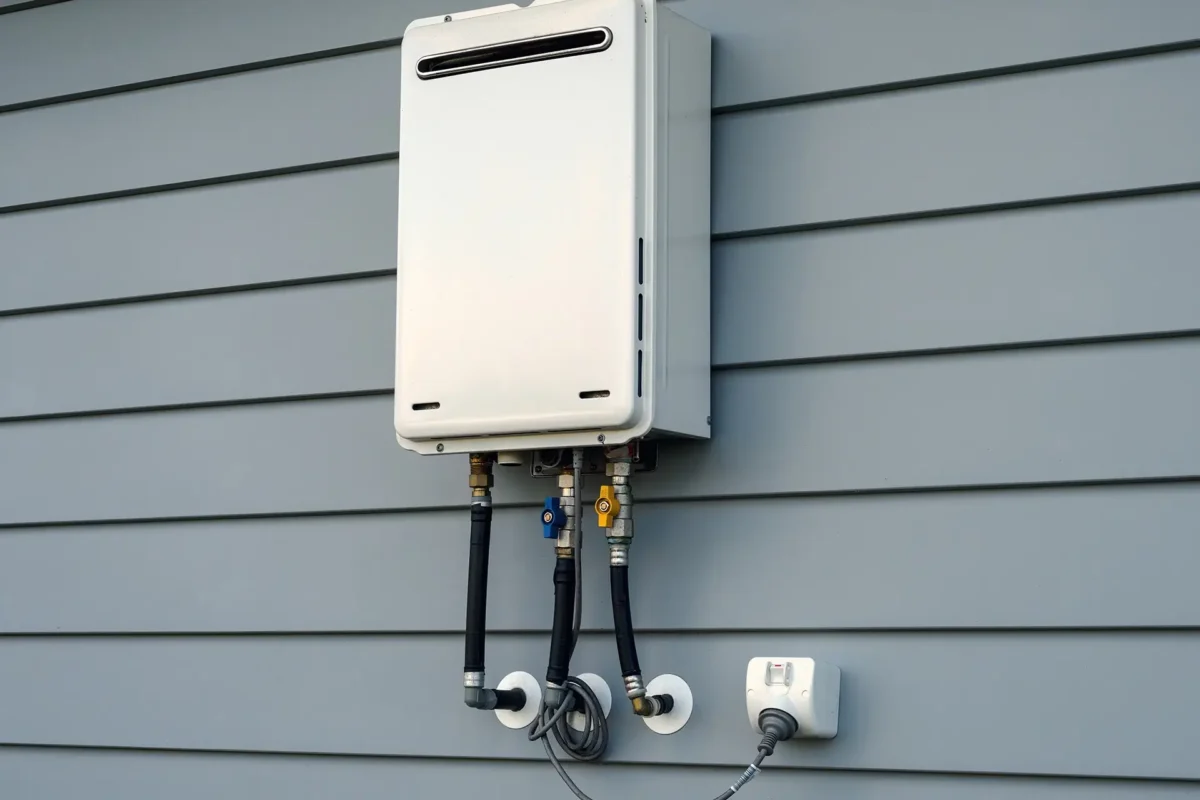
Tankless water heaters are significantly smaller than traditional tank units, since they don’t need to store a large reservoir of hot water. This compact size opens up installation options that aren’t available with a bulky tank — mounting on a wall, tucking into a closet, or freeing up floor space in a utility room or garage. For homeowners with limited mechanical space, this flexibility can be a meaningful practical advantage beyond just the hot water performance.
Things to Consider Before Switching
Tankless water heaters aren’t automatically the right fit for every home. Upfront installation costs are generally higher than a like-for-like tank replacement, particularly if the switch requires upgrading gas lines or electrical service to meet the unit’s demands. Proper sizing also matters significantly — an undersized unit will struggle to keep up with simultaneous hot water demands, while an appropriately sized system delivers on all the benefits above. A plumber can assess your household’s hot water usage patterns to recommend the right unit size.
Comparison: Tankless vs. Traditional Tank Water Heater
| Feature | Tankless | Traditional Tank |
|---|---|---|
| Hot water supply | Continuous, on-demand | Limited to tank capacity |
| Energy efficiency | Higher (no standby loss) | Lower (constant heating) |
| Typical lifespan | 20+ years | 10-15 years |
| Upfront cost | Higher | Lower |
| Space required | Compact, wall-mountable | Larger, floor-standing |
| Installation complexity | May require gas/electrical upgrades | Generally simpler |
This comparison offers general guidance — actual performance and cost depend on your home’s specific setup and hot water demands.
Is a Tankless Water Heater Right for Your Home?
The best candidates for a tankless system are households that use a lot of hot water simultaneously, want long-term energy savings, or are dealing with space constraints around their current water heater. Homes with older gas lines or electrical panels may need additional work to support a tankless unit’s demands, which is worth factoring into the overall cost comparison. A licensed plumber can walk through your home’s specific setup and hot water needs to determine whether the switch makes financial and practical sense.
Why Professional Installation Matters
Tankless water heater installation involves more than swapping one unit for another — proper sizing, gas line or electrical capacity, venting requirements, and water flow calculations all need to be accounted for to ensure the system performs as expected. Improper installation can lead to inconsistent water temperature, reduced efficiency, or premature equipment failure, making professional installation an important part of actually getting the benefits this upgrade promises.
Frequently Asked Questions
1. How long does tankless water heater installation take?
A straightforward like-for-like replacement typically takes a few hours, while installations requiring gas line or electrical upgrades can take a full day or more.
2. Do tankless water heaters require special maintenance?
Yes, periodic descaling is recommended, especially in areas with hard water, to prevent mineral buildup from affecting performance over time.
3. Can a tankless water heater supply an entire house?
Yes, when properly sized for the household’s peak hot water demand, a whole-house tankless system can supply multiple fixtures simultaneously.
4. Is a tankless water heater worth the higher upfront cost?
For many households, the combination of energy savings, longer lifespan, and continuous hot water supply offsets the higher upfront cost over the system’s lifetime, though the exact payoff depends on usage patterns.
5. Do tankless water heaters work with gas and electric systems?
Yes, tankless units are available in both gas and electric models, and a plumber can help determine which option best fits your home’s existing utility setup.
Conclusion
A tankless water heater offers real advantages over traditional tank systems — continuous hot water, lower energy use, a longer lifespan, and a smaller footprint — making it a compelling option for many households. If you’re weighing whether a tankless water heater makes sense for your home, a proper assessment of your hot water needs is the best place to start. Main Plumbing Inc — contact us today for a free consultation on your water heater upgrade in North Hollywood, CA and the surrounding areas.